
Nepal – and everyone who, like me, loves this Himalayan nation and its people – is still in shock following the catastrophic flooding along the Bhotekoshi and Trishuli rivers. According to the Nepalese government (as of 8:00 p.m. local time today), more than 350 bodies have been recovered so far. The number of people missing in the disaster area in Nepal and southern Tibet varies, depending on the source, between a total of about 1,100 and 1,500 people from over 30 countries.
Infrastructure collapsed
Many of them are tourists who were traveling in the region and with whom contact has been lost. There is still hope that at least some of them were able to reach safety before the inferno broke out and that they have simply been unable to report in so far because the infrastructure has largely collapsed.
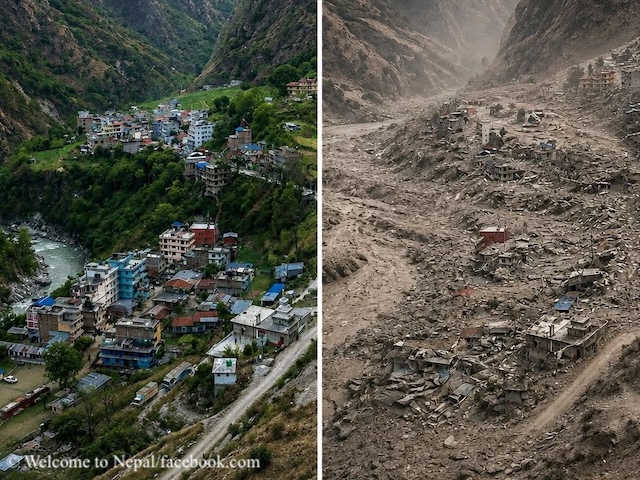
The massive flash flood that swept southward early yesterday morning (local time) from the region around the Chinese border town of Gyirong Port wiped out entire villages, swept away dozens of bridges, and destroyed several hydroelectric power plants and large sections of the Pasang Lhamu Highway.
Key road link between Nepal and China
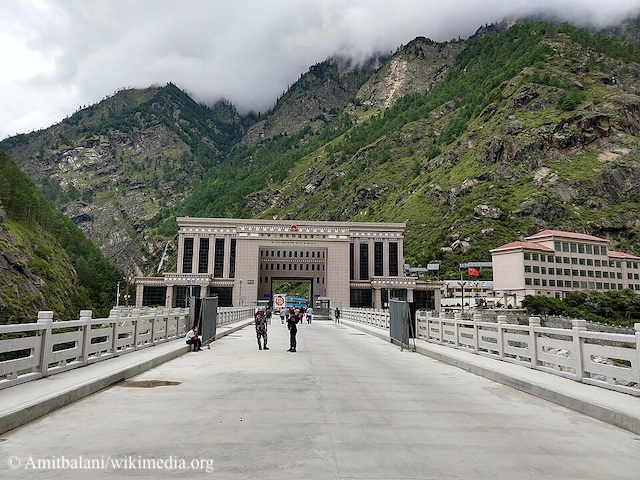
The road to Gyirong Port is currently the most important land link between Nepal and China, following the complete destruction of the Kodari/Zhangmu border post -located further east – during the devastating earthquake in Nepal in spring 2015.
A large portion of the trade between the two countries has recently been handled via this transportation corridor. In the first half of 2026 alone, Chinese authorities at Gyirong Port recorded more than 100,000 border crossings – an increase of nearly 13 percent compared to the first half of 2025.
Route to Mount Kailash and Langtang National Park
This connection is also of great importance for mountain tourism. It was only last June that a small number of tourists were able to enter Tibet via Kodari for the first time since the earthquake. Since 2015, most of those who chose the overland route have crossed the border at Gyirong Port.
Among them were many Hindu and Buddhist pilgrims who were visiting Mount Kailash, a six-thousander located in Tibet. The mountain is sacred to both religions and may only be circled on the 52-kilometer-long “kora,” but not climbed.
Many trekking tourists and mountaineers heading to the five- and six-thousanders as well as one seven-thousander in Langtang National Park also used the Pasang Lhamu Highway to reach the area. The spectacular mountain region is only about 50 kilometers from Nepal’s capital, Kathmandu.
Massive hanging glacier broke off
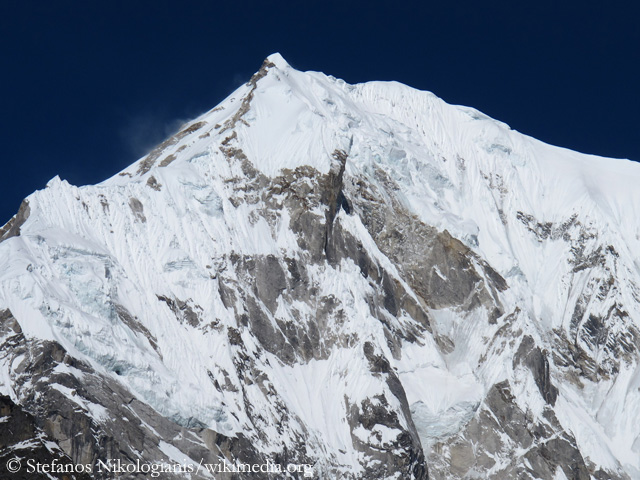
According to Chinese and Nepalese scientists, the tragedy began with a massive avalanche of ice and debris on the 7,229-meter-high Langtang Lirung, the highest mountain in the national park. Satellite images show that on the Tibetan north face of the seven-thousander, a massive hanging glacier broke off, plunging – along with the debris it carried – into a tributary of the Bhotekoshi River and triggering the sudden flash flood.
About a quarter of an hour after the first alerts came in from the border region, the government said it sent SMS warnings to about 600,000 people in the at-risk areas. But neither the authorities nor the residents of the narrow river valleys had anticipated the speed and scale of the disaster. In some places, the water level rose by nine meters within half an hour. There was only one way to escape: quickly uphill. Many were unable to make it.
Update, 28 August: According to the Nepalese police, the number of flood victims whose bodies have been recovered has risen to 579. Authorities reported that nearly 2,000 people are still missing.