

Following the tragic death of German mountaineer Laura Dahlmeier on the 6,096-meter-high Laila Peak in the Karakoram in Pakistan, many are asking themselves: Should the body of the deceased be recovered after all? Or should her last will be respected?
Laura had written in her will that her body should remain on the mountain if others had to risk their lives to recover it.
This was exactly the case immediately after Dahlmeier’s death: the rockfall that had claimed Laura’s life at around 5,700 meters continued and would have posed a potentially fatal danger to the members of a recovery team.
And if conditions on the mountain improve? Even then, it would remain a dangerous undertaking, Dan Stretch of the US organization Global Rescue informs me.
An ethically complex issue
“The retrieval of remains from high altitude presents extreme risks, avalanches, rockfall, and severe exposure. Often this burden is placed onto local workers,” says Dan. “This is an ethically complex issue – while we respect the wishes of families seeking to bring their loved ones home, we must prioritize the preservation of human life.”

Stretch is a paramedic and senior manager of medical missions for Global Rescue. He has coordinated hundreds of evacuations and crisis response operations in the Himalayas and other high mountains around the world. Global Rescue has been organizing rescue operations for travelers worldwide since 2004, including in the Himalayas and the Karakoram.
To benefit from this service, one must become a member of Global Rescue. If one is going on an expedition to the highest mountains in the world, it is advisable to also take out a “High-Altitude Evacuation Package,” an insurance for rescues from high altitudes.
No body recovery if there is a risk to rescuers
The company informs me that membership also includes the transport of mortal remains in the event of death: “If a Global Rescue member dies while traveling, we will bring their remains to the home country morgue of the member’s choice.”
Over the years, Global Rescue has also coordinated multiple mortal remains repatriations from mountains in Pakistan, says Dan: “However, we do not engage in body recoveries that would place rescuers at risk.”
Longline rescues are rare
In the Karakoram mountains, the situation is further complicated by the fact that only the Pakistani military is allowed to carry out helicopter rescue flights. The reason for this is the country’s decades-long conflict with India over the mountainous region of Kashmir.
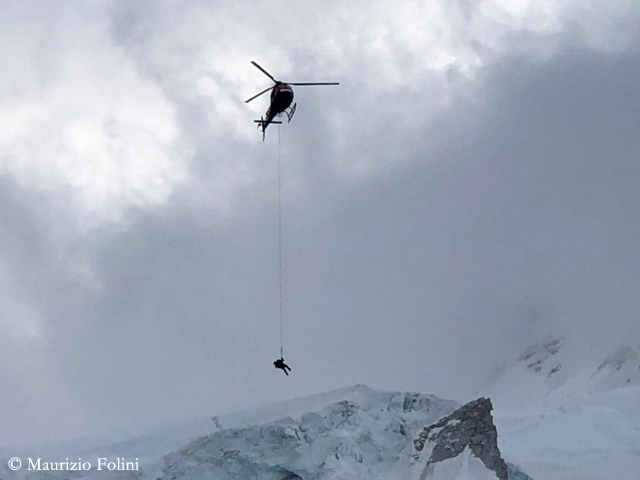
There is no professional mountain rescue service like in the Alps or, nowadays, on Mount Everest or other popular mountains in Nepal. There have also been a few spectacular longline helicopter rescues in the Karakoram. In 2005, for example, Slovenian Tomas Humar was rescued in this way from 5,900 meters on the Rupal Face of Nanga Parbat, and in 2018, Russian mountaineer Alexander Gukov was airlifted from 6,200 meters on the North Ridge of Latok I. However, such operations are the absolute exception on Pakistan’s highest mountains.
Instead, when emergency calls are made, the army usually asks the expeditions to first bring the accident victims down to base camp so that they can be flown out from there. This is especially true if the climber has not survived the accident and the body is lying at high altitude on the mountain.
Costs similar to those of an expedition
It can be very expensive to recover a body from the mountains of Pakistan, says Dan Stretch: “Potentially several hundred thousand dollars – these operations often require a full expedition team, climbers, guides, porters, equipment, and logistics, similar in scale to a summit attempt.”
In some cases, the recovery is delayed and conducted the following season, “replicating a full expedition cost for 10 to 20 team members,” according to the manager of Global Rescue. “If helicopters are involved for search or recovery, costs can escalate further, sometimes reaching six figures just for the aviation component.”
Dead brother recovered from over 8,000 meters
In 2007, mountain guide Georg Krohntaler from Kufstein, Austria, had to raise a total of around 110,000 euros to recover the body of his brother Markus, who had died in an accident on Broad Peak a year earlier, from over 8,000 meters. Together with two other mountain guides from Tyrol and six Pakistani high-altitude porters, Georg managed to bring his dead brother down from the mountain and home.
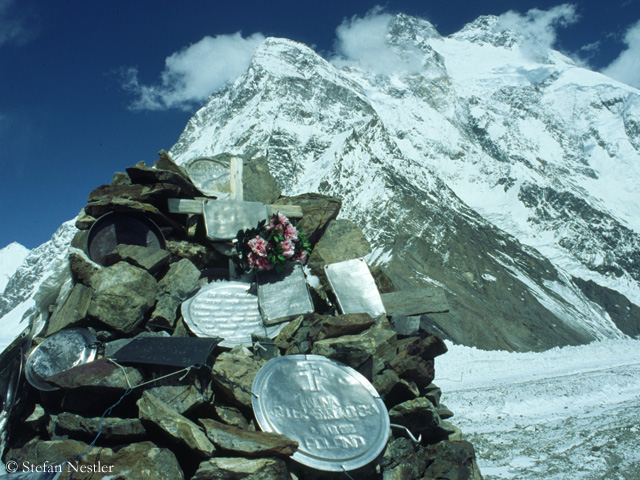
“It might even be easier to get someone down from K2 than from Broad Peak. The steeper it is, the easier it is. You just have to lower the recovery bag,” Georg Kronthaler told the Austrian newspaper Standard in 2023 . ”The difficult parts are the traverses and intermediate ascents. On Broad Peak, we had several traverses, and it was extremely exhausting to hold the bag with my brother in it.”
Rescuers waived payment
In summer 2024, there was a similar operation on K2. Five Pakistani mountaineers brought the body of their compatriot Muhammad Hassan Shigri from an altitude of around 8,200 meters down to base camp. His death a year earlier had made headlines around the world because dozens of mountaineers had passed by the dying man on their way to the summit without helping him.
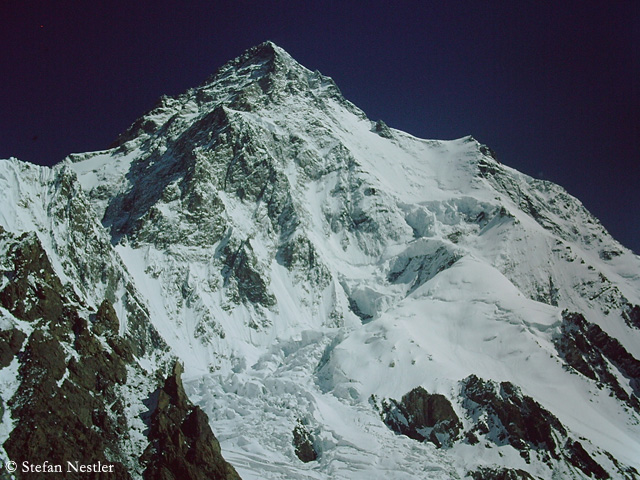
“We don’t have any funds available for this mission,” wrote Pakistani mountaineer Naila Kiani, who coordinated Shigri’s recovery from K2 Base Camp, on Instagram just over a year ago. “So we kindly request support from corporates or individuals willing to fund this humanitarian effort. All funds will go towards the climbers’ salaries and logistics expenses.”
In the end, Naila and her Pakistani team managed to reduce the costs to a third of the originally calculated amount. Many of those involved in the rescue had waived their fees.